Crawl Space Water Removal in Discovery Bay
Crawl Space Water Removal in Discovery Bay from an estimated $0.50 / sq ft. The one job on this site that sometimes cannot succeed — and that is worth saying first. Free inspection and a written quote.
Crawl Space Water Removal in Discovery Bay: what actually fails
This is the case this whole site is built around. Close to the water, a crawl space can refill from below as fast as it is pumped, and drying it while groundwater keeps arriving cannot succeed. The answer is drainage, and we will say so rather than quote days.
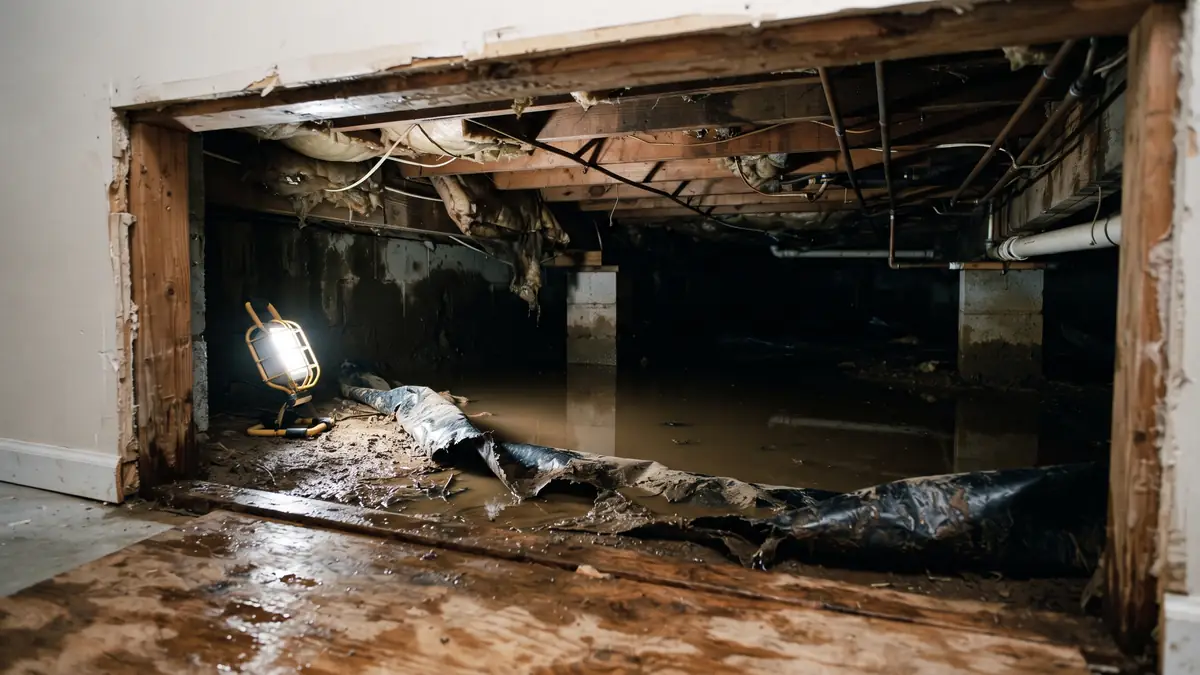
A crawl space is where water hides longest, and it raises a question no other part of the house does: whether the water is still coming in. On low-lying ground a crawl space can refill from below as fast as it is pumped.
- Whether the water stopped, asked before anything is priced
- Whether drainage rather than drying is the actual answer
- A drying target the building can actually hold
- No open-ended pumping of a space that refills from below
Crawl space water removal cost in Discovery Bay
Pumping a crawl space falls in the same estimated range as any extraction. Whether drying it afterwards is worth paying for depends entirely on why the water is there, and that answer can change from one property to the next. Close to the water, the first pricing question is whether the water has stopped. Where a space refills from below, days of equipment buy nothing, and an open-ended day rate against groundwater is not worth agreeing to.
The question that comes before the price
Did water arrive from above, or from below? A burst line above is a job with an end. Groundwater rising into the space is not, and drying against it cannot get ahead of it.
Where the straight answer is drainage
A space that refills after being pumped needs a sump, a barrier or grading — none of which is drying, none of which we sell, and all of which cost less over five years than repeat dry-outs.
What raises the cost legitimately
Access and headroom. Equipment that has to be carried through an eighteen-inch hatch takes longer to place, and a space with no power nearby needs a run made to it first.
Homes in Discovery Bay, and what that means for crawl space water removal
Water under a house near the water may never have come from the plumbing at all, and drying it while it keeps arriving is a job that cannot succeed.
Here the first question is whether the water stopped — not how much of it there is.
Five questions worth asking, including of us
Every one of them is about a unit rather than a total, because a unit is something you can follow.
What is your per-square-foot rate, and what area are you charging?
Two halves of the same question. The estimated industry range is $0.50 to $1.50 for extraction and $3.75 to $7.50 for mitigation; if a figure sits outside that, ask what makes this job different.
Will you tell me if drying is the wrong answer?
Sometimes it genuinely is. Where water is still arriving, drainage comes before drying, and a straight answer to this question is worth more than any total.
Do I get the readings?
Daily, in writing, for as long as the equipment is in the building. They show what the days of drying actually did, and they cost nothing to produce.
Other water extraction work in Discovery Bay
Crawl Space Water Removal in neighboring cities
Before you book crawl space water removal
What people ask about this work, answered plainly.
Can you just pump it out?
Yes, and on some properties that is genuinely all it needs. But if it refills, pumping is a service you will be buying repeatedly, and we would rather tell you that on the first visit than on the fourth. Where the water arrives from below, the answer is drainage rather than us.
How do I know if it is groundwater?
Two signs, neither of which needs equipment. It comes back after being pumped, with no plumbing fault upstream. And it is worst after sustained rain or when the nearby water level is high, rather than after anything happening inside the house.
My crawl space keeps filling. Why won't drying fix it?
Because drying removes water, and your problem is water arriving. In a space that refills from below, every day of equipment runs against groundwater that is still coming in, and the readings never settle. The fix is drainage: a sump, a sealed vapor barrier, grading away from the building. None of that is drying, and we would rather say so than sell you days.
Can my carpet be saved?
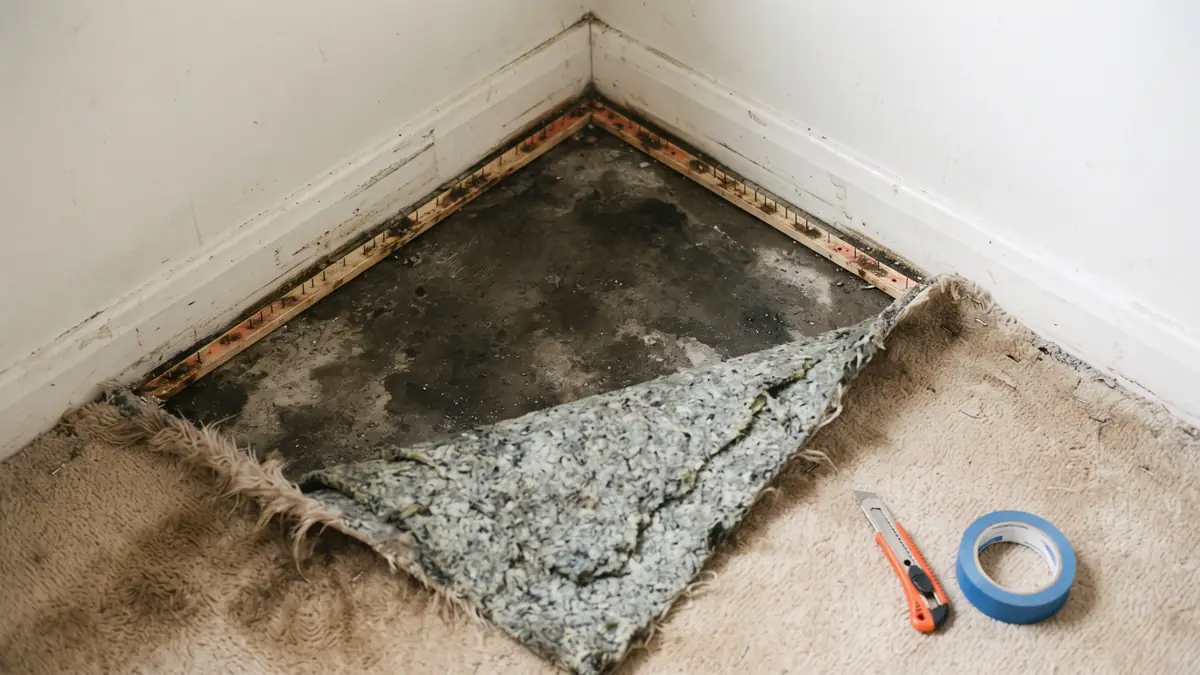
Often yes, if the water was clean and it has been less than a day or two — and the decision is about the pad underneath rather than the carpet. Clean supply water over a pad that can be lifted and dried, or replaced on its own, is the routine case. Contaminated water or groundwater is not: at any age, the porous material comes out. The failure worth knowing about is a dry carpet over a wet pad. It passes a hand test, it passes a look, and it returns as a smell about two weeks later. A meter reading taken through the carpet into the pad is what settles it.
How long does water extraction take?
Pulling the standing water out is usually a matter of hours for a room or two; the drying that follows is what takes days. Extraction removes the water that can be pulled out with pumps and extractors. What is left inside the materials then has to be dried with air movers and dehumidifiers, and that part runs until the moisture readings say the materials are dry. A larger area, a crawl space with poor access, or water that is still arriving all stretch the extraction itself.
Need crawl space water removal in Discovery Bay?
Estimated per-square-foot and per-day rates before any total. Told when drainage, not drying, is the actual answer.